Powering Your Life: Green & Smart

Search
Close this search box.
10 08, 2024

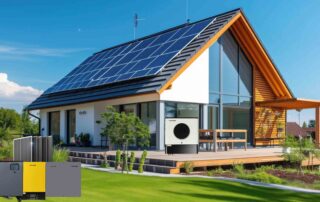
Introduction to four application scenarios of photovoltaic + energy storage system

By |2024-08-10T11:23:05+08:00August 10th, 2024|Guideline|0 Comments

There are many benefits of photovoltaic plus energy storage. First, it can ensure a more stable and reliable power supply. The energy storage device is like a large battery that stores excess solar power. When there is insufficient sunlight or a large demand for electricity, it can provide electricity to ensure continuous power supply.   Secondly, photovoltaic plus energy storage can also make solar power generation more economical. By optimizing operation, it can allow more electricity to be self-generated and self-used, reducing the cost of purchasing electricity. In addition, energy storage equipment can also participate in the power auxiliary service market to bring additional benefits. The application of energy storage technology makes solar power generation more flexible and meets various electricity needs. At the same time, it can also work with virtual power plants to achieve the complementarity of multiple energy sources and the coordination of supply and demand. Photovoltaic energy storage is different from pure grid-connected power generation. It [...]

20 07, 2024

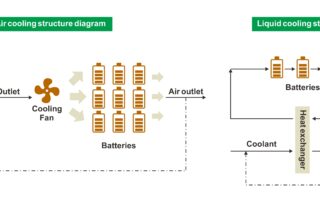
Eight major differences between air cooling and liquid cooling in energy storage systems

By |2024-07-20T09:37:01+08:00July 20th, 2024|Guideline|0 Comments

Energy storage system is the key support for building a new power system. It can convert electrical energy into chemical energy for storage so that it can be released when needed. At present, air cooling and liquid cooling are the two commonly used heat dissipation methods in energy storage systems.   Different heat dissipation principles Air cooling is to remove heat through air flow to reduce the surface temperature of the device. The advantages of air cooling are simple structure and low cost, but its heat dissipation effect is greatly affected by factors such as ambient temperature and air circulation, and is not suitable for high-power and high-density equipment. Liquid cooling is to remove heat through liquid circulation to reduce the internal temperature of the device. The advantages of liquid cooling are good heat dissipation effect and high stability, but its cost is high and it requires maintenance of the liquid circulation system. Different applicable scenarios The air cooling system [...]